Renee's staircase had been the family photo wall for twelve years. Wedding photo at the top. A blurry beach trip shot from when her son was four and wouldn't stop running toward the water. School pictures she kept meaning to update and never did. She wasn't about to take any of it down — that wall was half her family's history. She just wanted one more thing mixed in.
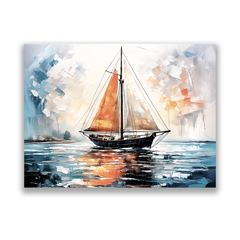
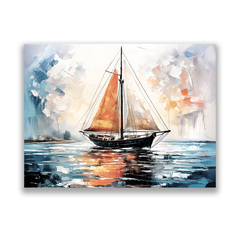
She bought a square piece of seashell canvas, the kind that's part of the staircase wall art people search for when they're trying to break up a long run of frames. She didn't measure for a gallery wall grid. She didn't look up a color scheme. She hung it about a third of the way up, right where the stairs turn, slotted in between her son's third-grade photo and the wedding shot, in the exact spot her eyes already landed every morning carrying coffee up to get dressed — her own personal focal point.
It wasn't a styling decision. It was just where she wanted to see it.
A week later her sister came over for the first time since the staircase had the family photos and the canvas together. She didn't say anything decorator-ish about it — no "ooh, what a touch" comment people make about throw pillows. She just stopped halfway up the stairs, looked at it for a second, and said, "wait, when did you get this? It's so you." Not a five-star rating — just her sister knowing, in one glance, exactly what kind of art that was.
That's the thing about a stairway. Nobody styles it for guests the way they style a living room before company comes. The staircase area is more private. It's the wall you see in pajamas, on your way to grab the mail, definitely not Instagram-ready. So whatever ends up there has to earn its place on repetition, not a single big reveal. Renee's piece earns it every time she goes up for a nap she didn't plan on taking, or down because the dog's barking at nothing.
This is where most of the staircase wall ideas you'll find online get it backwards. They treat the staircase like an interior design project — stylish ideas borrowed from someone else's Pinterest board, a strict gallery wall grid, a rule about spacing every piece exactly six inches apart. None of that holds up against a wall that curves, climbs, and gets walked past by someone carrying a laundry basket. The real question isn't what's stylish. It's what you want to see forty times a day without getting tired of it.
For some people that's one big piece at the landing — a perfect place to actually pause for a second on the way up, even if it's just half a beat. For others it's mixed in with what's already there: the family photos, the kid's height-chart pencil marks, whatever's already climbing the wall with them. The best way is the one that works for you. The piece doesn't need to coordinate with anything. It needs to be something you're glad to see again tomorrow morning, coffee in hand, before you're even fully awake.